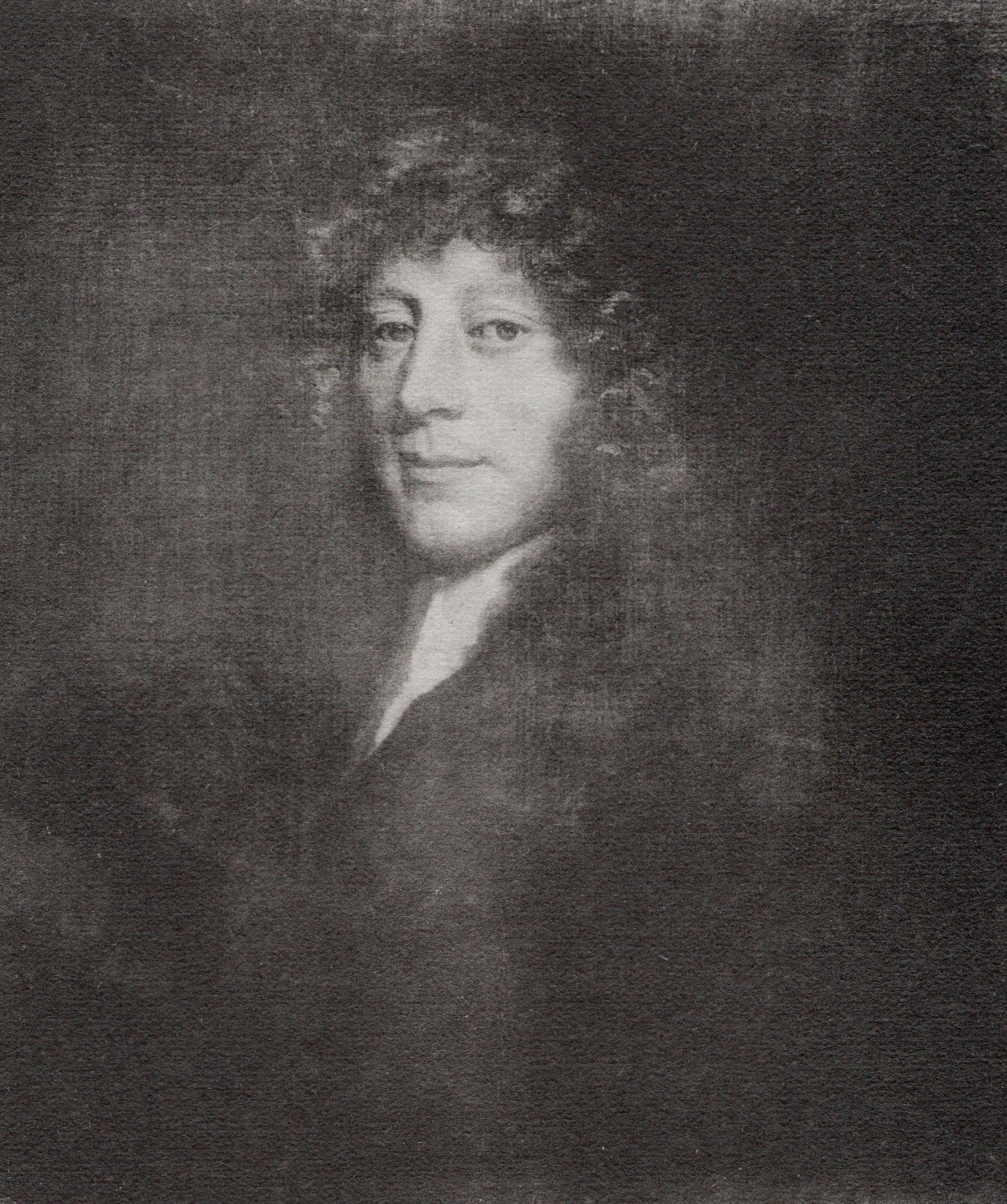
Inside Duff House Mausoleum, one of the memorial stones – now a bit damaged by age – seems to include the word “Antigua”.  Some of the wording is very difficult to read so there are no real clues as to what the connection of the Duff family to the Caribbean might be!
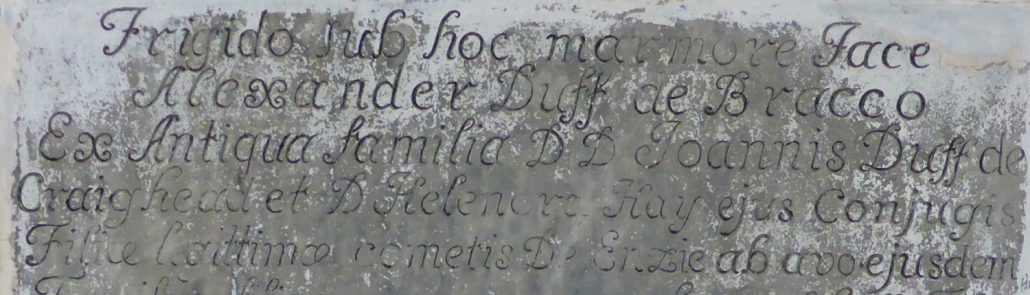
Part of the memorial to Alexander Duff of Braco showing “Antigua” (centre left)

In fact this is the Memorial for Alexander Duff of Braco, the uncle of the first Earl Fife.  The memorial reads:

“Frigido sub hoc marmore Jace Alexander Duff de Bracco ex antiqua familia D D Joannis Duff de Craighead …..” which translated makes it clear it is nothing to do with the Caribbean!:

“Under this cold marble lies Alexander Duff of Braco of the old family of John Duff of Craighead….”

ie the word is “Antiqua” not “Antigua”, a “q” not a “g”.  It certainly isn’t obvious because an upper case A is used, and the q looks almost identical to the g that has been incised except for a small squiggle at the top!

After the 2nd Earl Fife had the Mausoleum built in 1792, initially to house his parents who had first been buried at Rothiemay, before he moved them to the lovely Mausoleum spot above the river, he also moved other relatives.  Alexander Duff of Bracco (or Braco) was his great uncle and one of the key members of the Duff family who built up their fortune.  He was born in 1652 and died in 1705 and originally buried in Grange, but not before he had bought many estates across north east Scotland.

Alexander is very important in the history of Macduff.  In 1699 Alexander purchased “Doune” (ie Macduff after it’s name was changed in 1783).  The seller was Lord Cullen – not part of the Seafield family of Cullen House, but Sir Francis Grant, a Scottish Judge who later became Lord of Monymusk.

Alexander Duff of Braco married Margaret Gordon in 1678, and they had four daughters and one son, William of Braco born circa 1685.  William died in 1718 with one daughter, also Margaret, so on his death his estate passed to the crown (by way of escheatment, there being no valid direct male descendants).  His uncle, William Duff of Dipple, proved he was the male heir and so William of Braco’s estate passed from the Crown to him.  William Duff of Dipple was the father of the first Earl Fife.  (As an aside to this main story, being family orientated, William Duff of Dipple signed Eden House and estate, just south of Banff, over to Margaret Duff, his nephew’s daughter, so that her future was secure.)

In other words, without Alexander Duff of Braco purchasing Doune/Macduff, it would not have passed via his son and uncle, and in turn to William Duff 1st Earl Fife, who built Duff House, and then to his son James Duff, 2nd Earl Fife.  It was James Duff 2nd Earl who developed Doune from being a fishing hamlet to being the town it is today, bringing in craftsmen, building the harbour, the roads, the bridge and much more.

So “Antigua” is not a Caribbean link, but part of the history that has resulted in the great town of Macduff!

For clarity on some of the places:

Craighead was used as an alternative name for Muldavit, today in Rathven (just N or the A98 just before you get to the first Buckie turning from the east).  Neither name appears today, but Craig Head on the coast is still named on maps, west of Findochty.

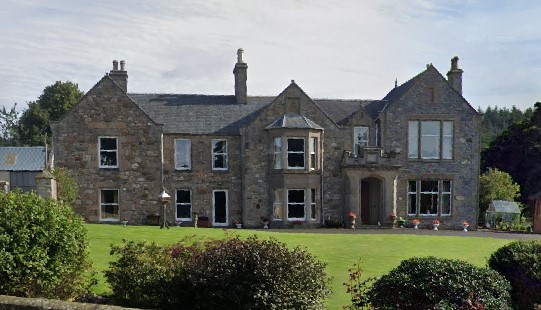
Braco is a place; a farmhouse, in Grange, east of Keith.  The “Book of the Duffs” shows Braco in circa 1912 after it had been updated from Alexander Duff’s time, and Google Streetview shows it in 2021. 
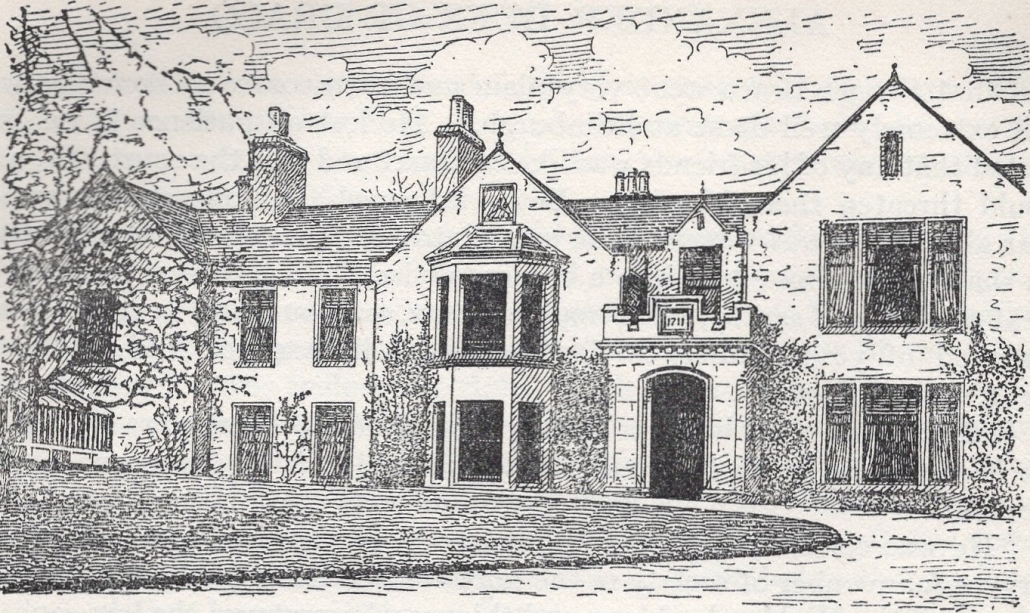
Braco House in circa 1912 (ex Book of the Duffs)
Braco House in 2021 (courtesy of Google Streetview)

Dipple is a place, a farmstead, just south of Fochabers.  William of Dipple, who’s son became 1st Earl Fife of Duff House, was a brother to Alexander of Braco.
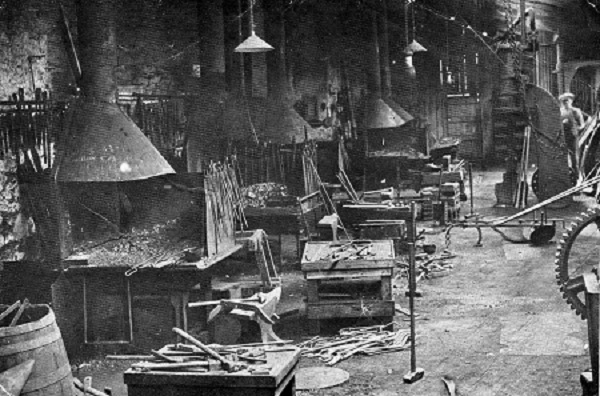
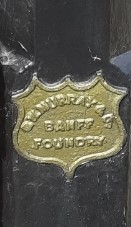
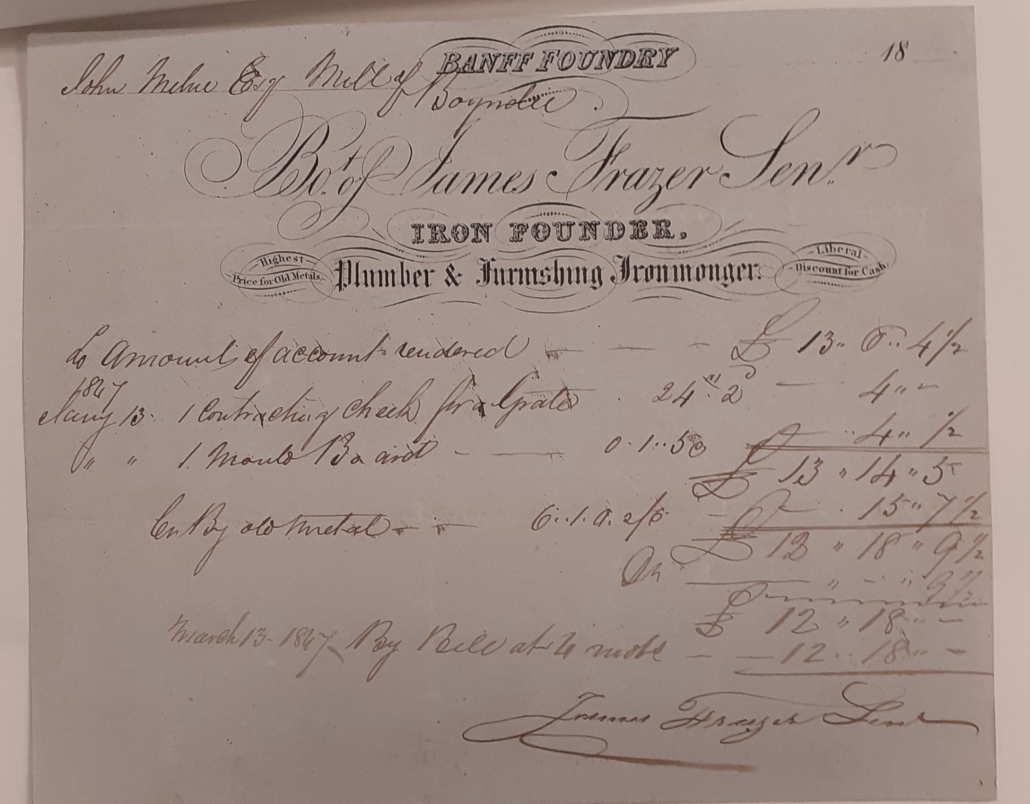
A view of the inside of Banff Foundry

If you look carefully as you walk around Banff you can still find traces of a major industry in the town (see the photos).

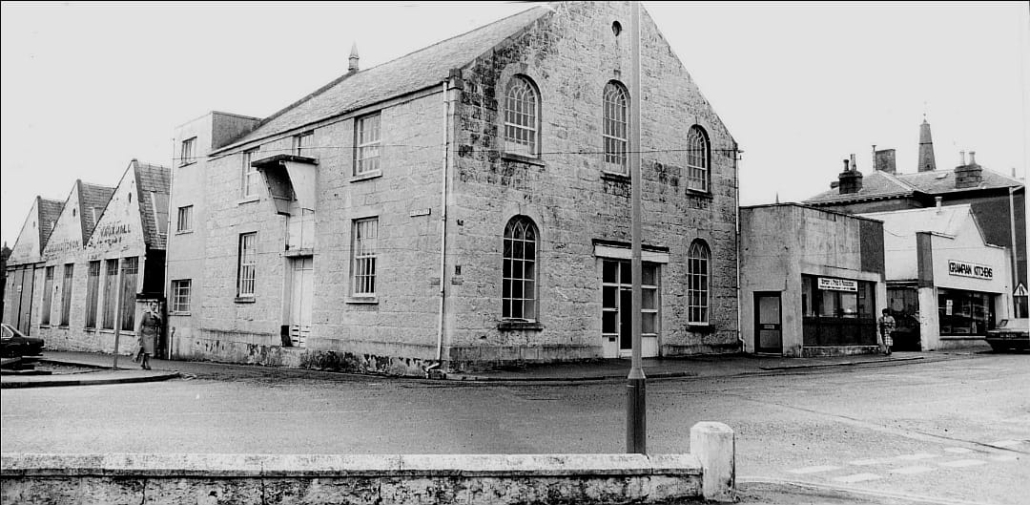
The area where Tesco supermarket is now would have been very different before 1955. Banff Foundry was developed on the site of a blacksmith’s forge (Robert Thomson’s blacksmith shop), bounded by Reid Street, Carmelite Street and Bridge Street. The industrial forge was installed in 1827 by William Fraser.

In 1858, an article in the Banffshire Journal and Advertiser gave details about the new Foundry and the iron-making process.

 “The large new casting room is 60 feet long by 30 feet wide”. “The furnace is like a huge lemonade bottle, from which a chimney to a considerable height rises. On the side, and near the head of the furnace, at a spot exactly corresponding with that on which the aerated water vendor  pastes his label, is a large circular opening, opposite which a platform is extended. From this platform the workmen (who must partake, somewhat of the salamandrine character from the amount of heat they endure) feed the furnace, by the opening, with metal and fuel.” (Banffshire Journal and General Advertiser, Tuesday 23 November 1858)

The Foundry made a wide range of agricultural implements, gates, fences etc. Many people collect old agricultural implements made in Banff by G. W. Murray and later Watson Brothers, which can still be seen today. (See the accompanying photos.) Around Banff, there used to be drain covers with Banff Foundry written across them.

In 1867 to 1869, the Foundry is described in the Ordnance Survey name book as “A large iron foundry on Reid Street, occupied by G W. Murray, the property of the Aberdeen Town & County Bank.”

G.W. Murray was the owner of the Foundry from 1863 until his death in 1887, aged 53 years. He had an adventurous life, living in Australia from 1852 until 1862, where he made his fortune. (Australia’s gold rush started in 1851). George Wilson Murray married Cecilia Blake in 1862 and built the Italianate house at South Colleonard, just outside Banff.

The Foundry had a tumultuous history, burnt down in 1892. However, it recovered very quickly and the business thrived, employing 35 people in the 1890s.

In 1902, the Foundry, then being run by the Watson brothers, exported agricultural machinery worldwide, e.g. Cape Colony, South Africa; Montevideo and Hobart, Tasmania, being just a few of the destinations.

Were humans in Banff and Macduff 3,000 years ago, or even earlier?  It seems they must have been and even back then had an appreciation for the beauty of our countryside.

One of the pieces of evidence, about a mile south of today’s Banff Bridge, as a small island in the middle of a large field, there are a few stones, lying at all angles.  Today, none can be said to be truly upright.

The first found written record of these doesn’t appear until 1780, described by Thomas Pennant as “several large stone pillars, tending to form a semi-circle, and are doubtless the remains of a Druid temple.”  Unfortunately there was no accompanying drawing!  The idea of a “Druid” temple, often associated with sacrifices “in honour of immortal gods” was a theory applied to stone circles through to the mid-nineteenth century.

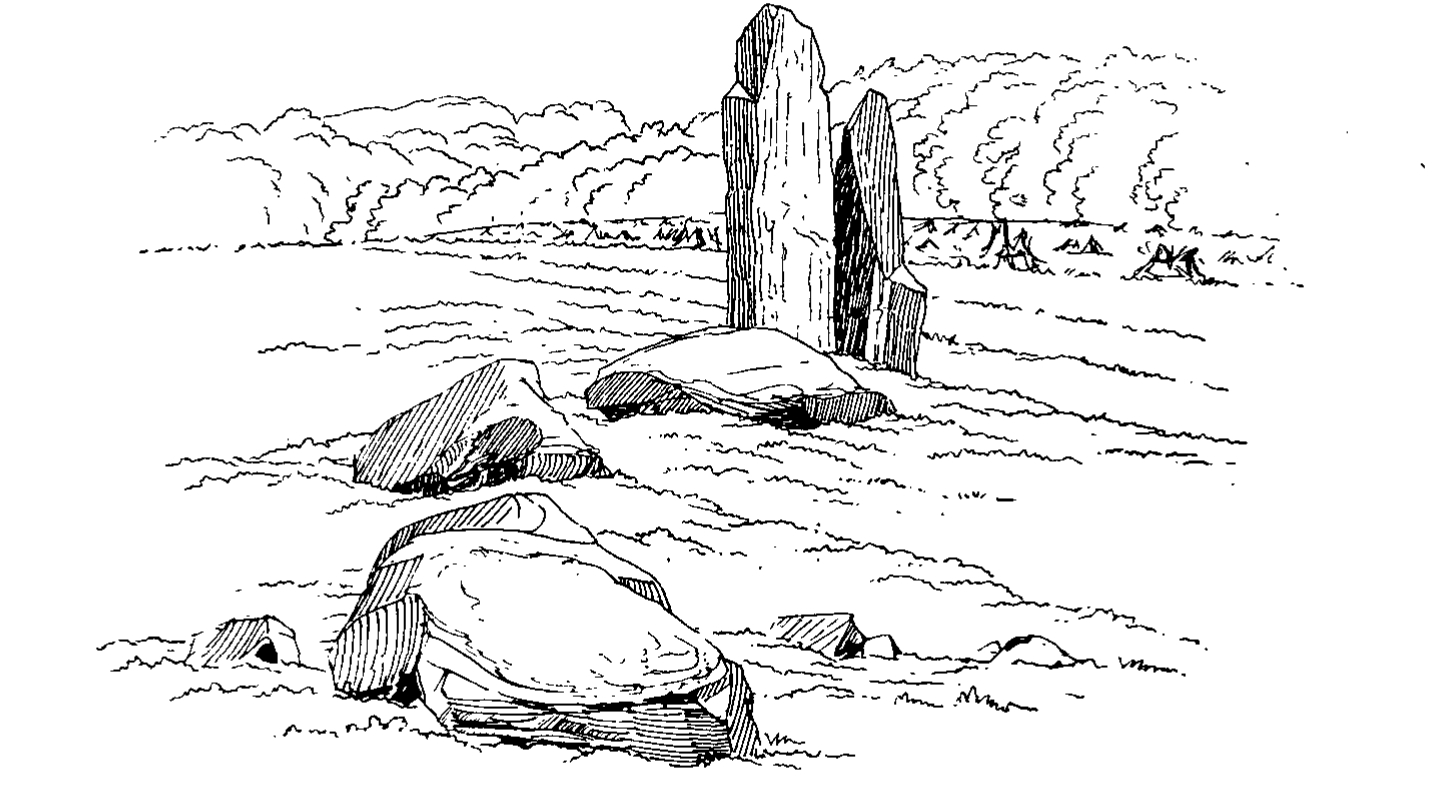
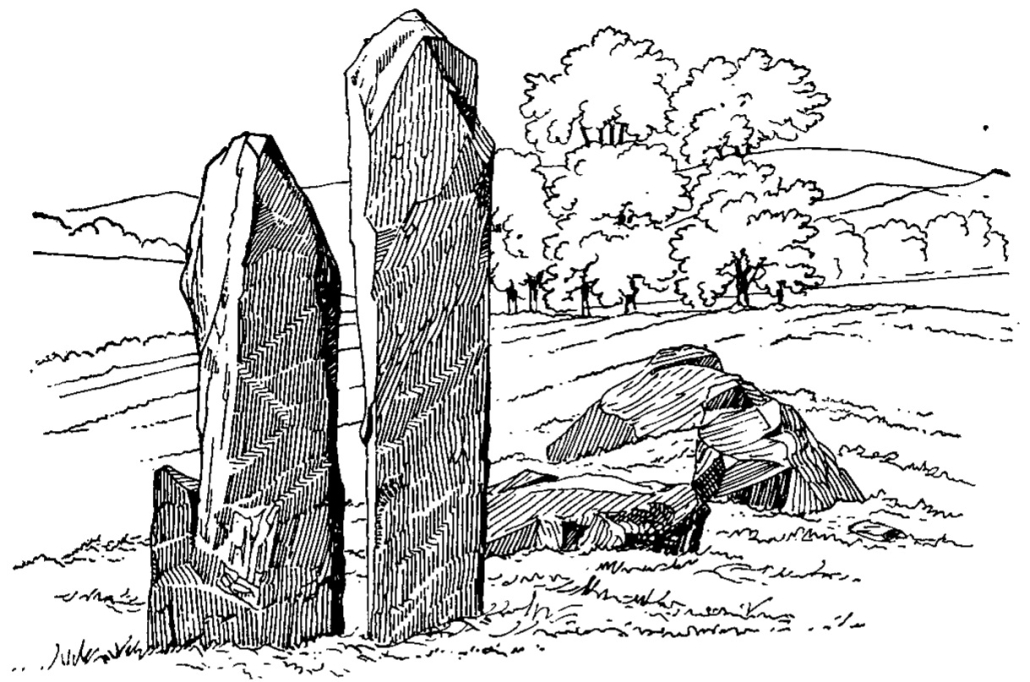
An in-depth survey was conducted in 1903 by Mr Fred Coles and reported in the 1906 Proceedings of the Society of the Antiquaries of Scotland.  By this time only two stones were left standing, and an inspection suggested only one of these was in it’s original position – which seems to be the stone most upright today.

Gaveny Brae stone circle drawn 1903

Mr Coles concludes that this used to be a recumbent stone circle, ie one stone lying horizontally, with an upright at each end of it – as many such circles can be found in the northeast of Scotland.  Unfortunately the Gaveny Brae circle has had stones removed and has been much damaged from “a deplorable want of respect” over the centuries in agricultural districts, a sad fact which Mr Coles much laments.

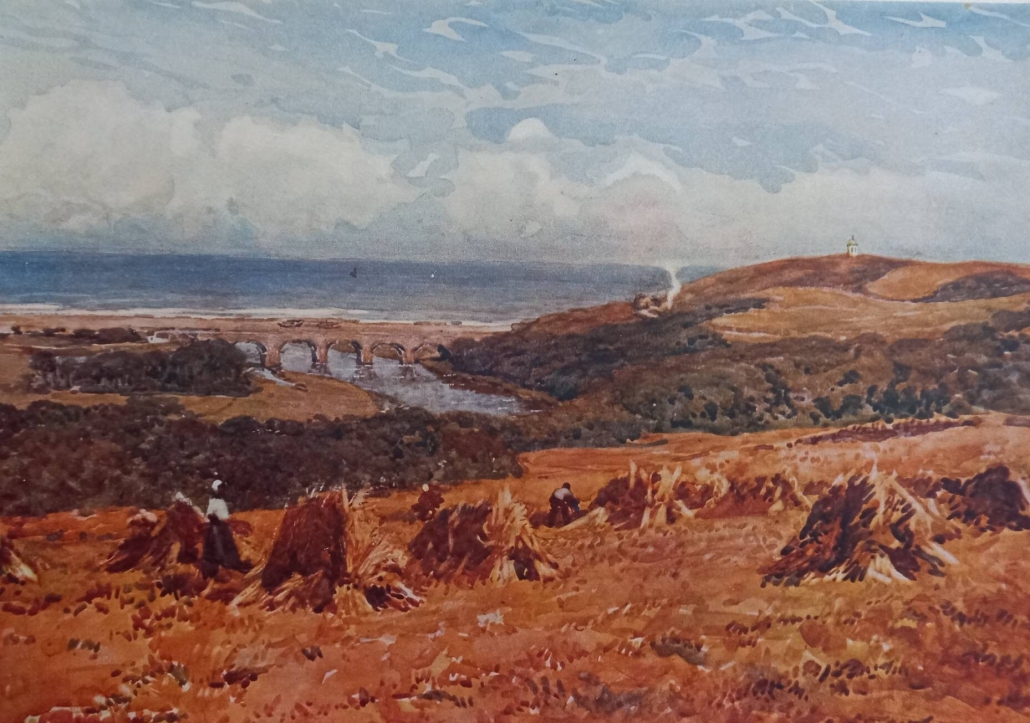
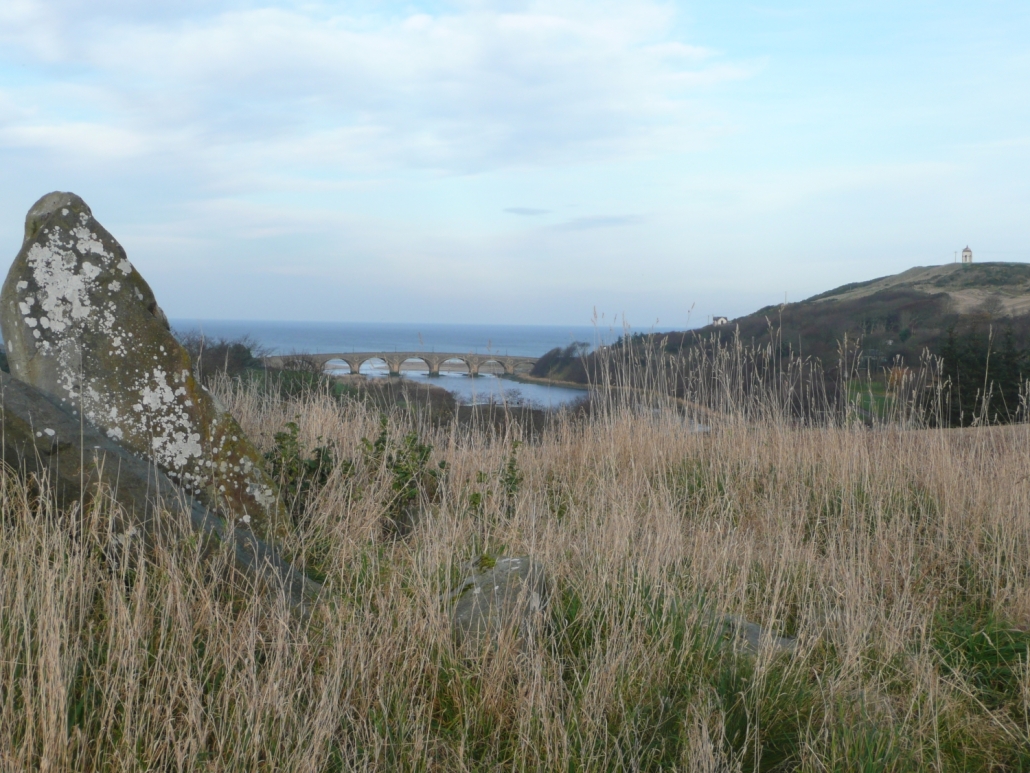
The position of the site is on a level part of a ridge looking north along the Deveron valley to the Moray Firth – from visiting the site it would seem likely the position was specifically chosen.  In 1901 the artist Robert Allan painted the view from seemingly the position of the stone circle, which is very comparable to a more modern view (this one with one stone in shot):

Banff Bridge, Robert Allan, 1901

The pillar of smoke or steam just to the right of centre in the Robert Allan painting being a train at Banff Bridge station!

The Royal Commission on the Ancient and Historical Monuments of Scotland published their detailed review of all the stone circles in north east Scotland in 2011 in their book “Great Crowns of Stone”.  By this time the Gaveny Brae stone “circle” is so unlike a circle it is relegated to an eight word reference in “Other Monuments”!

As to the real uses of these “Stonehenges of the north”, perhaps we shall never know.  It seems that their use changed over time after being places of worship and sometimes burial sites in the Bronze Age, but less respected as times changed.  There is much discussion in the papers of the Banffshire Field Club (available on line) on this subject.

If you are looking to visit the site, on the latest Explorer and Landranger Ordnance Survey maps the Gaveny Brae stone circle is marked as just “Standing Stone”, south of the Distillery; on the previous “1 inch” maps it was labelled “Cairn Circle”, although the obvious mound is believed to be just the result of farming, and not a burial cairn.

On the plus side, at least the Gaveny Brae site is known and marked and visible; another reported stone circle at the top of what is today Strait Path in Banff, the last stone of which was reported as the “Grey Stone”, is supposedly buried beneath the pavement!


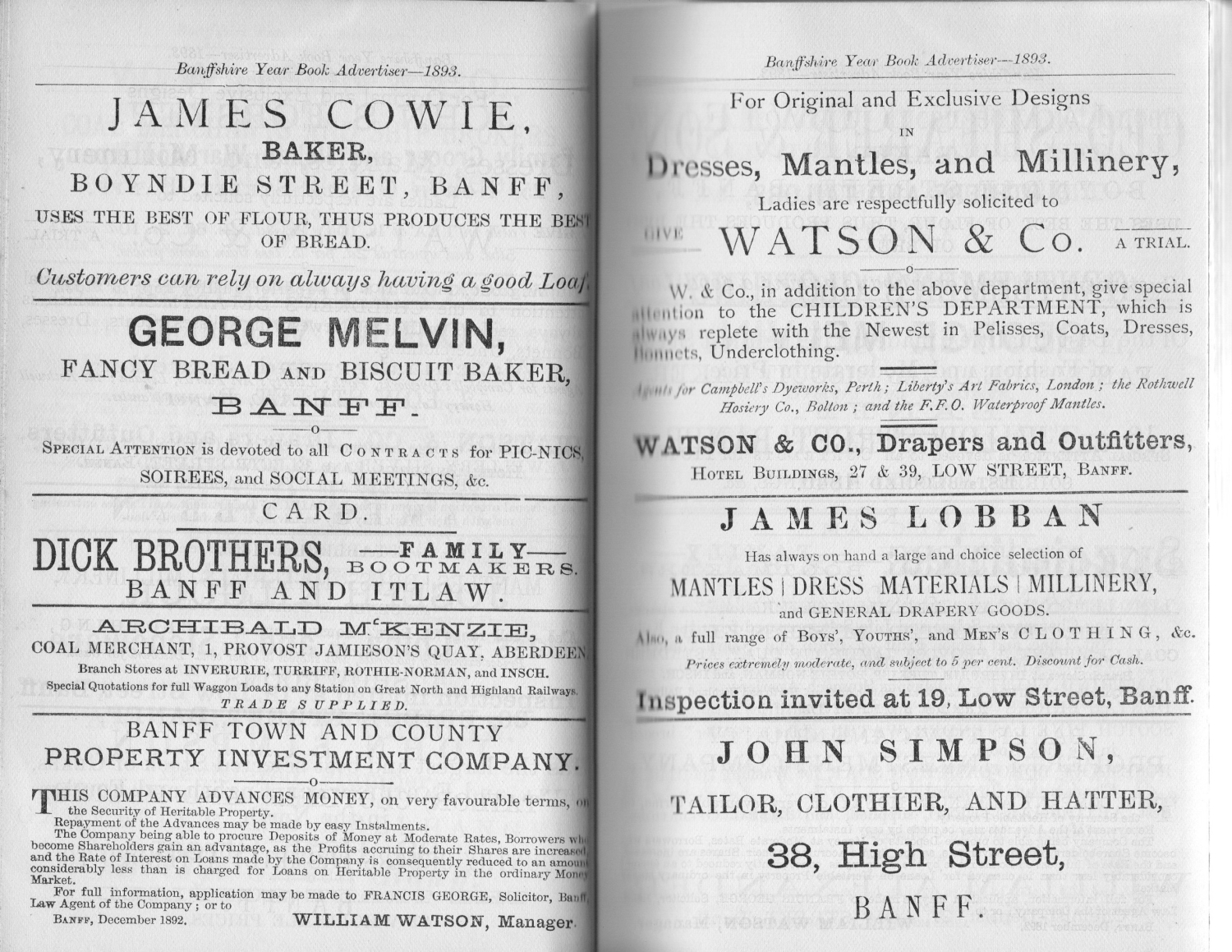
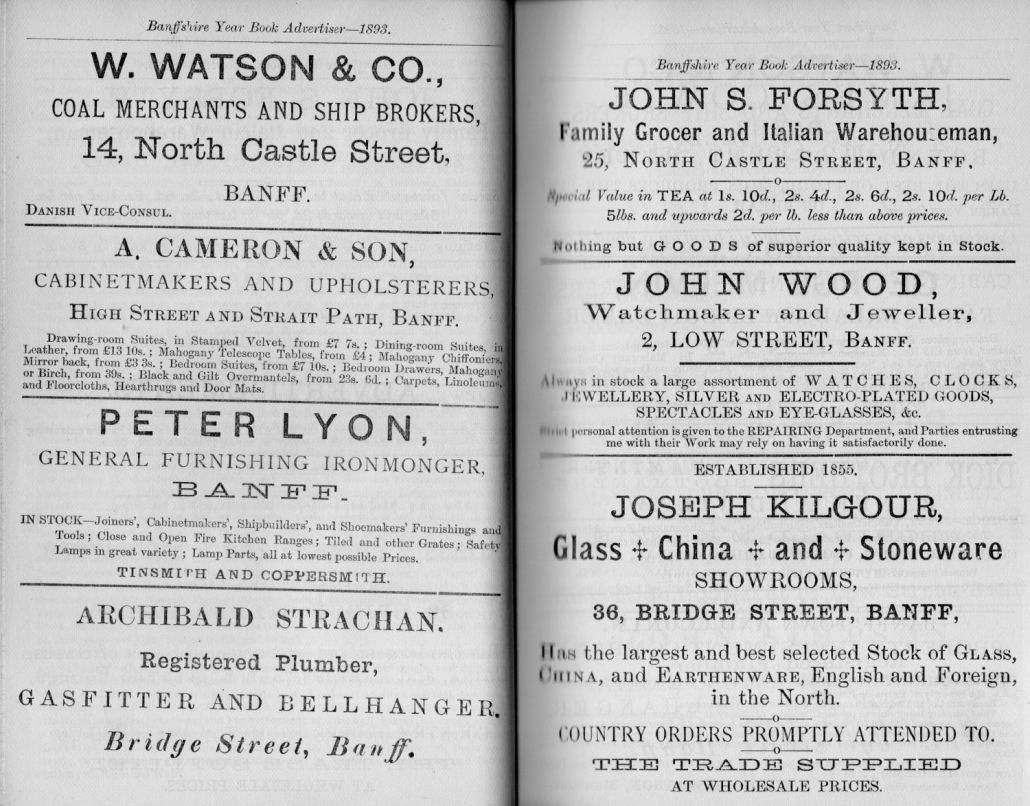
Pages of adverts
Banffshire Year Book 1893

There are six pages of small print about Banff in the Banffshire Year Book of 1893, starting with the unproven fact that it was made a burgh by Malcolm Canmore, who died in 1093.  It lists local bequests: “Misses Russell’s bounty provides £12 a year to each of 20 old women belonging to the town”. There was then a Town Council, with a provost, three bailies, a treasurer, a dean of guild, and four councillors, a town clerk and his deputy and a chamberlain. There was a burgh court, and harbour trustees, a school board, and an educational trust. There were two private schools for girls. There were ten solicitors, and five banks. There were six ministers, and they add the officials of the Bible Society, the Young Men’s Christian Association, and the Shipwrecked Mariners’ Society. 

How did people spend their time? There was a Literary Society, with a library of 6000 books, a Mutual Improvement Society, there were Science and Art Classes, a choral society, a draughts club, and an amateur dramatic society. If you were energetic, there was a lawn tennis club, a skating and curling club, two cricket clubs, a football club, a fox terrier coursing club, a golf club, and a gun club. There were 104 men in the Rifle Volunteers, and another 73 in the Volunteer Artillery.

There is about half a page of small print on five different categories of freemasons, listing all their officials, the scribe, the inner guard, the sojourner. There were also the United Oddfellows. If you were kindhearted you might help with the dispensary and soup kitchen.

There was a Danish Vice-consul, and they list 25 ships based at Banff. The biggest was the 303-ton Vigilant, the smallest the 16-ton Arab Maid. There is a very complicated list of the last posting time to and from every local hamlet: “Itlaw runner reaches end of walk at 9.35, leaves 12.10 and reaches Banff 2.20pm”.

There is a complete list of the resident Parliamentary voters, all male, of course, all 442 of them, with their trades. By then the franchise was wide enough to include labourers and postboys, several fishermen with ‘tee-names’, and a linen hawker. In the six pages there are women teachers mentioned, and the accompanist to the choral society, but otherwise this seemed a male world.

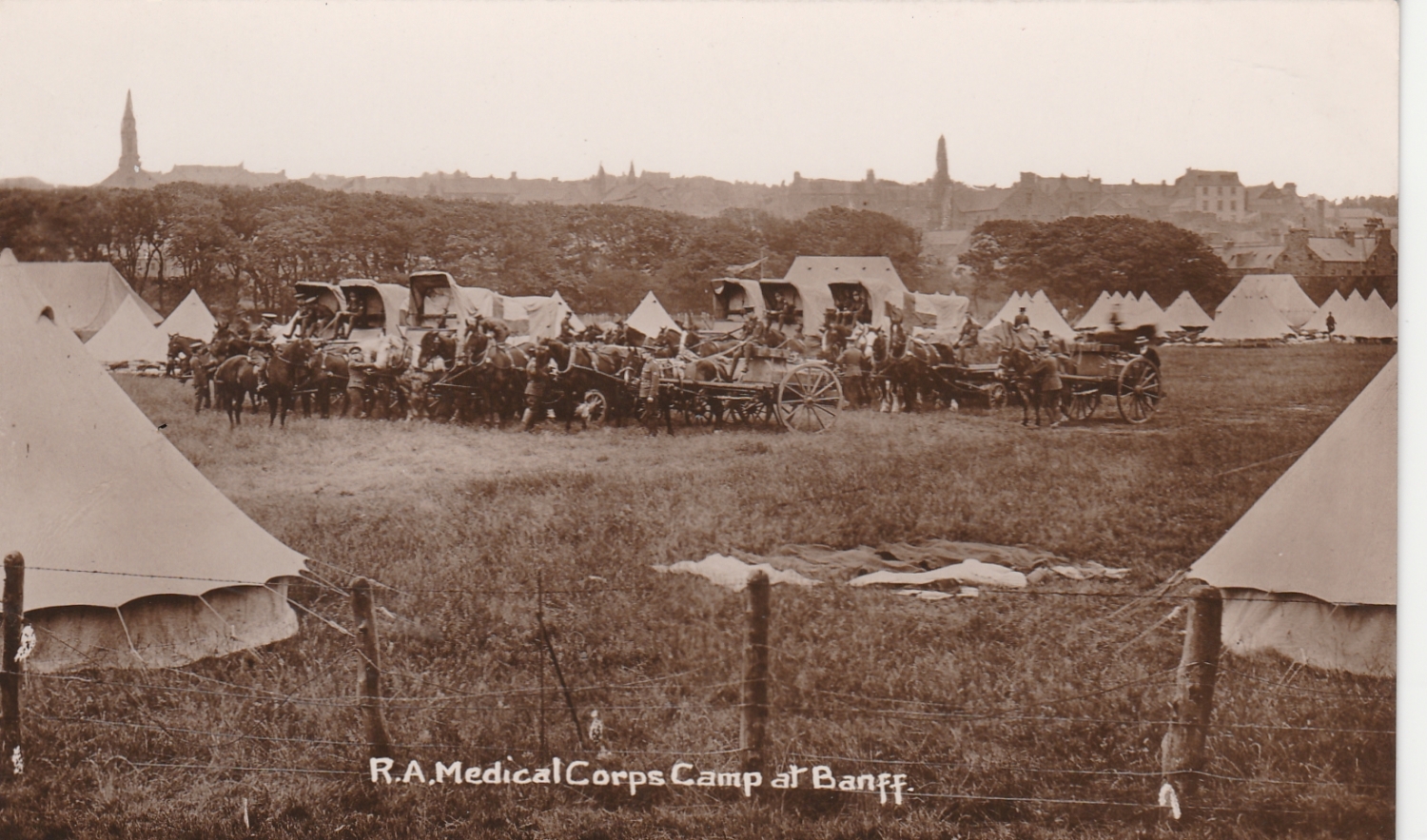
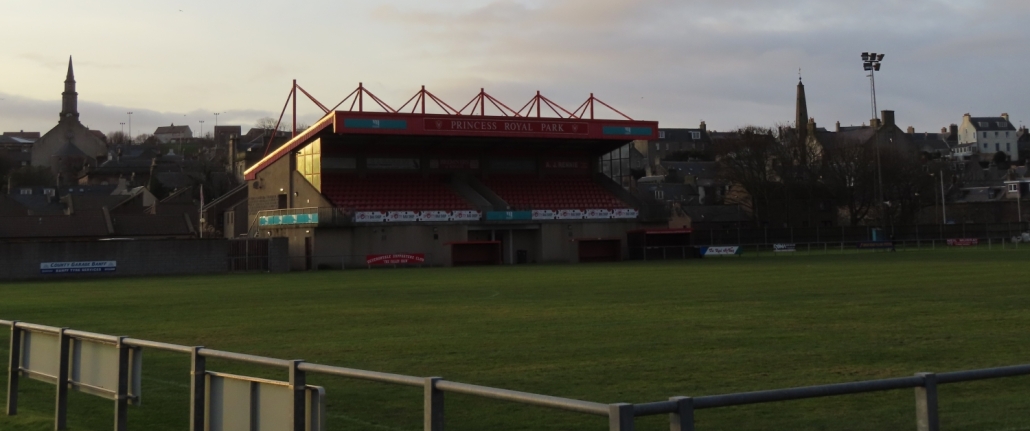
This Story was prompted by the finding of a rare postcard as shown above.  The Royal Army Medical Corps used to hold an annual camp, and Banff – specifically Canal Park – was the location in 1912.  The Banff skyline really hasn’t changed that much! 

Canal Park skyline Feb 2023

Five hundred years ago, Canal Park was a swamp, part of the Deveron estuary.  It was drained, perhaps by the influence of the Carmelites in Banff, and has had several uses since.  It’s name came from four hundred years ago, at the time of the building of Duff House in the early 1700’s, when a canal was built from Banff Bay to the back of Duff House.  The canal was the means of getting the stones that had been carved at William Adam’s works on the Forth, to the building site; brought to Banff Bay often on William Duff’s own ships, and then onto barges to Duff House.  Even though the canal no longer exists the name has stuck.

Canal Park was part of the Duff House grounds, the wall now visible just behind the silversmiths, extending along the side of Bridge Road to the gatehouse still existing in the Co-op car park.  In 1906 the Duke of Fife gifted the land to the Burgh Councils of Banff and Macduff for recreational uses and it seems much use was made of this Park.  In the early 1900’s Canal Park was one large park, including where the Princess Royal centre is today, as well as the football pitch and tennis courts nearer the river, although officially by then the whole area had been designated Princess Royal Park (named from the 1889 wedding of the 6th Earl Fife (1st Duke of Fife) to Louise the Princess Royal, daughter of the future King Edward VII.

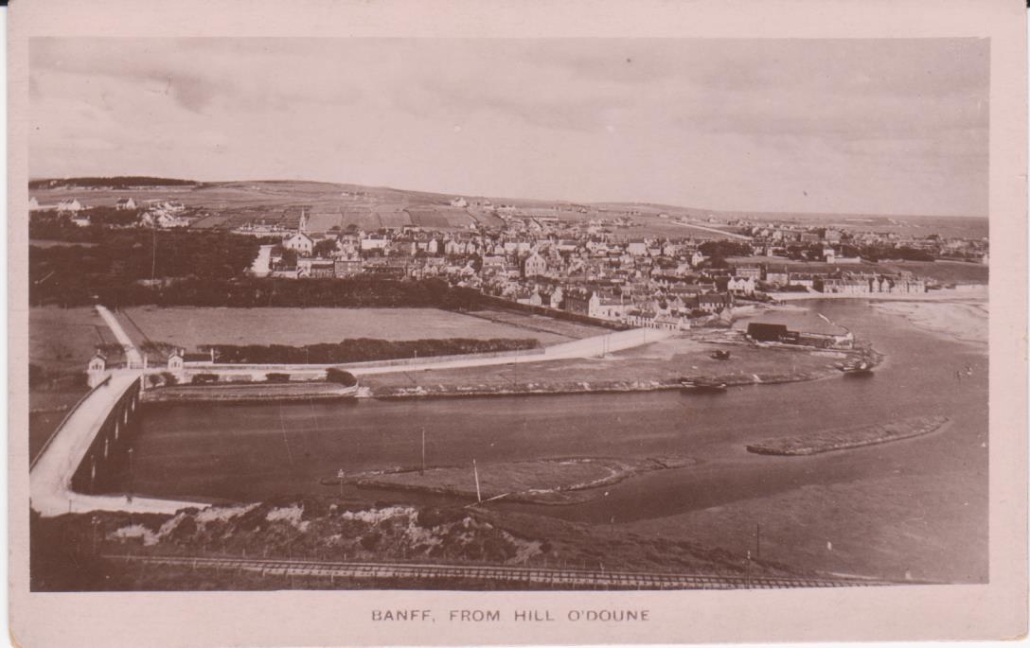
In this 1909 image the line of trees at the back of the Park, which are no longer there, is where the road to the Princess Royal centre and Airlie Gardens sheltered housing now is.

1909 postcard showing Canal Park in centre

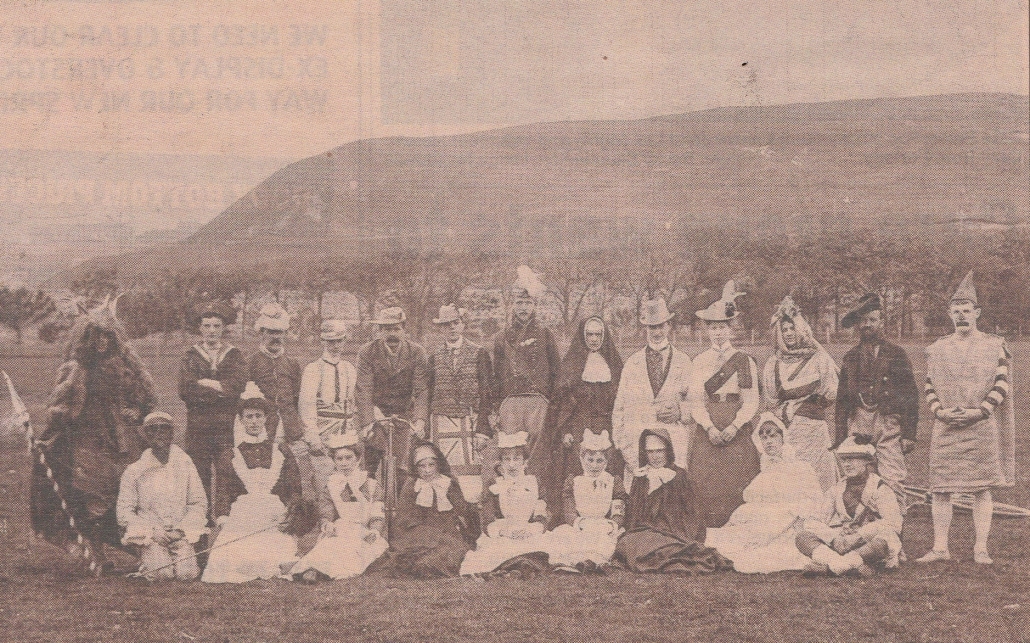
By 1912, the Park was under the care of a joint board from Banff and Macduff Burgh Councils.  Activities such as the important Banff Cattle Show were held there, and lots of smaller events such as a Fancy Dress parade.

Early 20th century Fancy Dress Parade Canal Park

But in 1912 the Trustees received an application from the Royal Army Medical Corps to hold their annual “camp”, partly because it was such a sheltered location, sheltered on two sides by a high wall, and to the west by the line of trees.  This was finally agreed, finding enough space for them and the Cattle Show.  The camp started on 20th July 1912 although the whole area was only available after the Cattle Show on the 24th !  It seems both were a great success.

18 officers and 231 men came to the camp, with 52 horses.  Two special trains were laid on from Aberdeen to bring the bulk of the men and horses,  All were living in tents and a special water supply had been laid out across the park for both the men and the horses.  The RAMC officers however received their meals at Duff House Hotel !

A number of activities, drills and exercises and demonstrations were laid on, as well as various parades, sports activities and musical events.  What the townsfolk felt about the 05.30 Reveille isn’t reported, but generally the RAMC Camp provided a lot of local attention.  On 23rd July a major exercise was held on Doune Hill, setting up a field hospital and transporting “injured” personnel. 

The camp was made to be inclusive of the town, local people able to come to some of the events, such as the Banff Pipe Band joining the RAMC Corps Band for various parades and concerts; football and tug-of-war matches between RAMC and towns’ teams.  Cricket matches were also played with the Banff team; although the RAMC easily won the cricket they were roundly trounced in football !

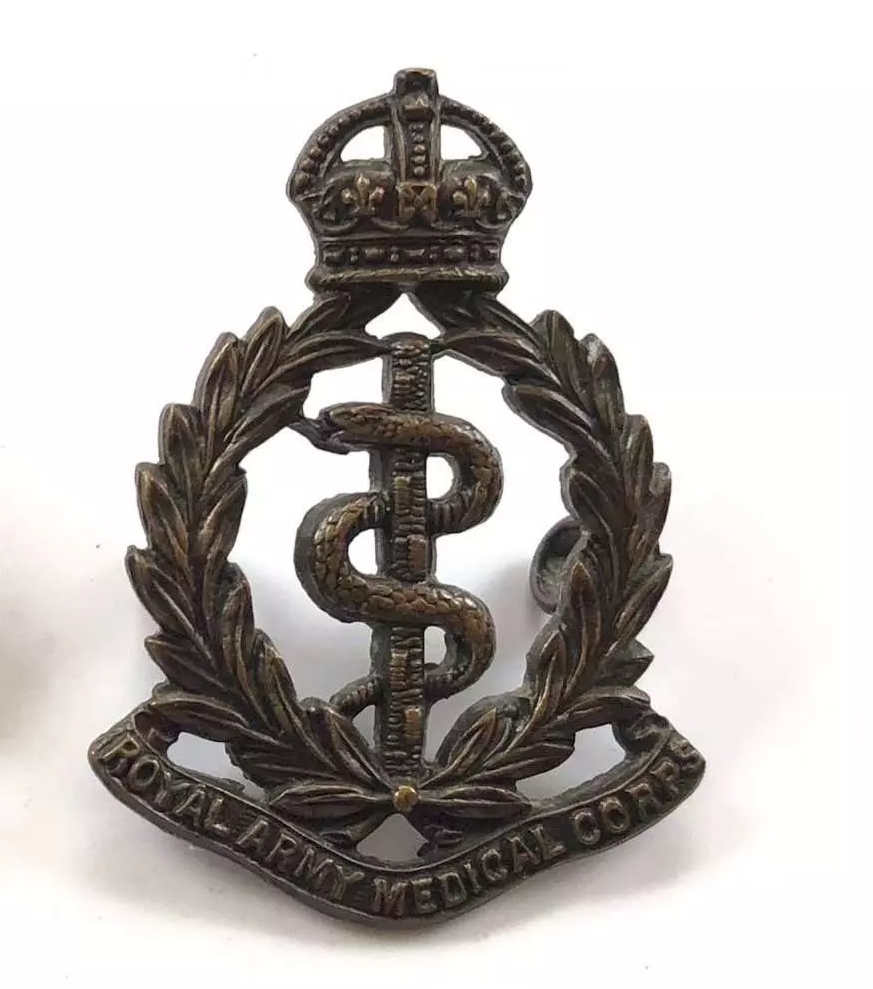
Early 20th century RAMC badge

The RAMC was formed in 1898 to centralise the provision of emergency first aid at the front line, as well as staffing health centres and hospitals and promoting health and disease prevention.  The unit still exists today.  Their badge – an early 20th century version shown here – has the “Rod of Asclepius” at it’s centre; the Greek God Asclepius of healing and medicinal arts, typically depicted by a non-venomous snake; a similar badge is used by some Scottish Community First Responder teams today.    The RAMC motto is In Arduis Fidelis; “Faithful in Adversity”.


In 1765 the Kirk Session of Banff gave 10s to Robert Thomson, master of the English School, “to assist in paying the funeral charges of his wife, he being in indigent circumstances”. Their son, George, then 8-year-old, went on to fame, as Robert Burns’ musical partner in collecting Scots songs, and George’s grand-daughter, Catherine Hogarth, was the wife of Charles Dickens.

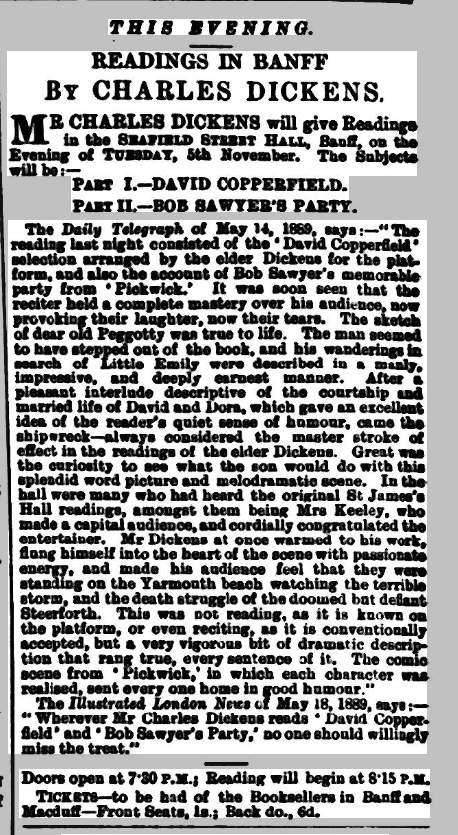
Dickens was a master of words, not only writing them, but aloud, and he made a fortune reading extracts from his novels on the stage. Someone said he did this once in Banff, and I checked, and at once there was this advertisement for a reading by Charles Dickens (see illustration) but it was the wrong man, and twenty years too late. This was his son turning an honest penny. Charles Dickens himself gave a reading in Aberdeen. It was absolutely wonderful if you were near the front of the Music Hall. They had no sound systems in those days.

There were occasional touring theatrical companies, and one of them which came to Banff had Dickens’ Christmas Carol. It wasn’t top of the bill: that was Professor Pepper’s Ghost. The more detailed advertisement for the same show at Peterhead talked about ‘the New and Astounding Effects developed by an ingenious application of the ELECTRIC AND OXY-HYDROGEN LIGHTS’. The audience must have shuddered in delight.  There was a Scotch Comic further down the list, and Kool Kennedy (late of Hague’s Minstrels).

But Banff didn’t need Charles Dickens in person, or a touring company. In 1868 ‘a number of gentlemen in the town’ took up amateur theatricals, after a ten-year lapse, and put on the ‘Memorable Trial of Bardell against Pickwick’ from the Pickwick Papers. This was in the St Andrew’s Hall, the Town Hall on the corner. There was a farce as well, which was ‘on the whole, pretty well acted’ which is as near a critical review as the Banffie would dare. They gave a big spread to the story: if only there had been pictures in those days. “The performances reflect very creditably on all who took part in them – whose names, for obvious reasons, we abstain from mentioning.” But if anyone has a picture of their great-great-grandfather as Mrs Bardell, we would be delighted to see it.   

Part 2 of 2

James returned home in September 1813 as the 4th Earl Fife, his father having died in 1811.  He was received in Banff and Macduff with huge rejoicing, met by the Magistrates, the principal inhabitants of Banff, the incorporated trades and “all the inhabitants of Macduff”.  Flags were displayed at the forts, the shipping, the hills; a salute was fired from the battery and “all the bells of Banff and Macduff rang a merry peal.”.   In the evening there were illuminations and immense bonfires in every street, and on Doune Hill there “was one of such extraordinary size and brilliancy as completely illuminated the whole road from the bridge of Banff to Macduff”.

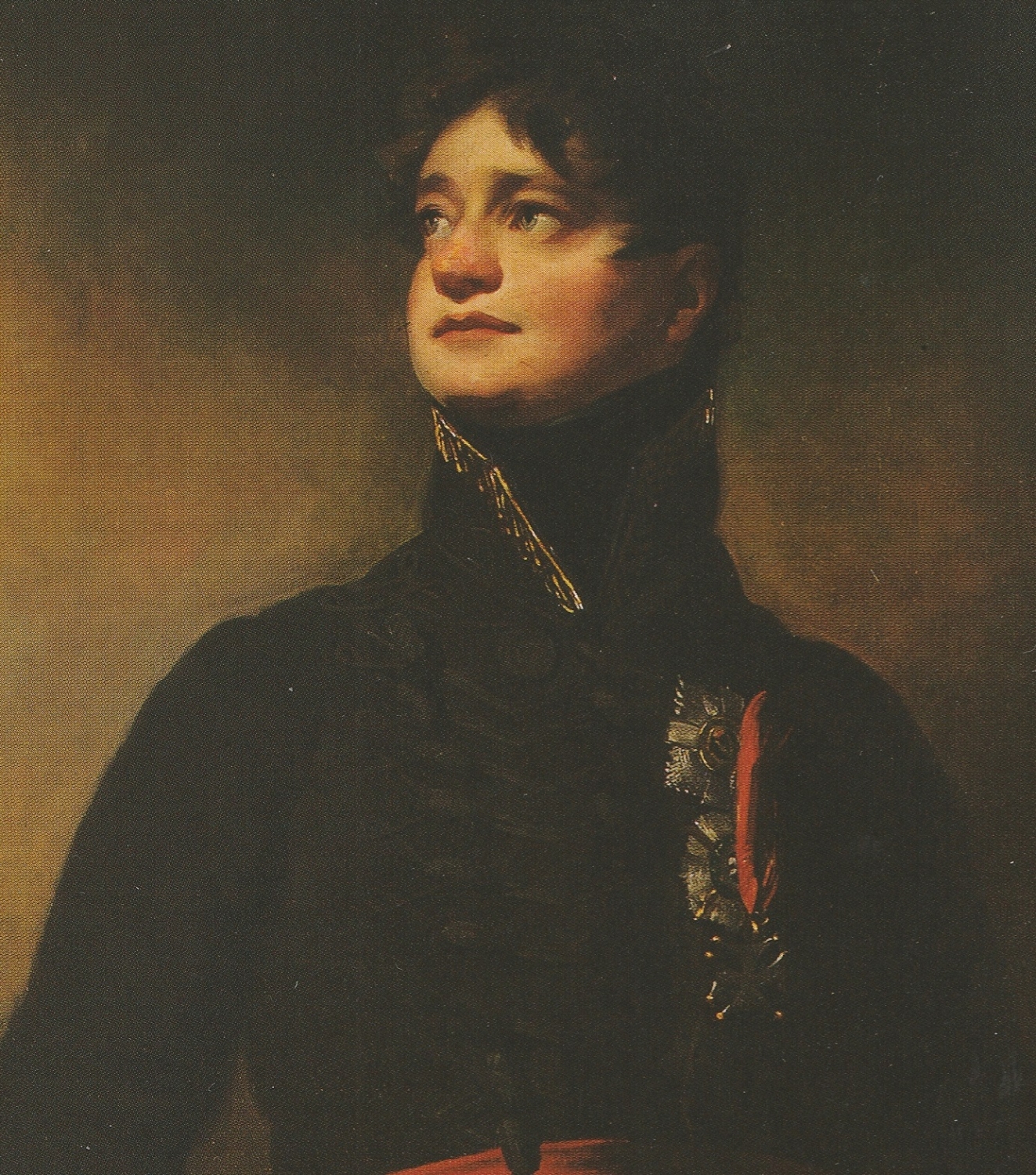
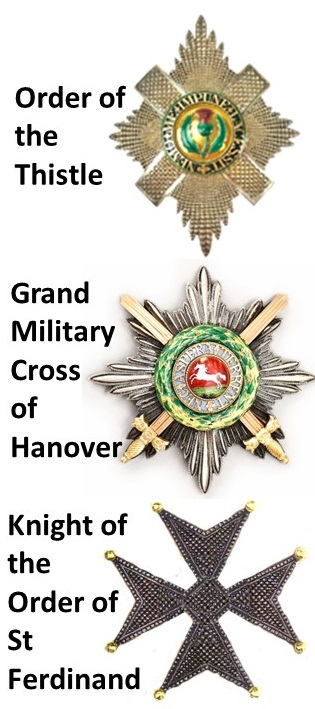
King George IV (as Prince Regent) made him a “Lord of the Bedchamber” (a trusted confidant and advisor), and later – 1827 – conferred on him the “Order of the Thistle” (of which there are only 16 at any time) and the Grand Military Cross of Hanover.   James is wearing these insignia in the painting in Duff House’s North Drawing Room.  He was also elevated to the British peerage as Baron Fife.

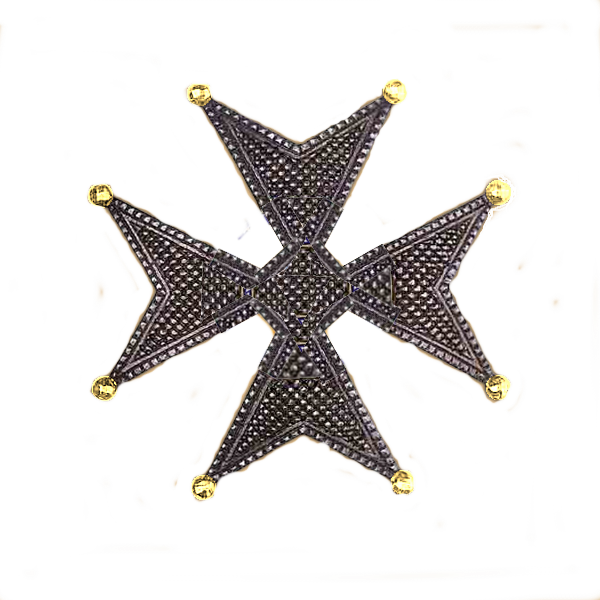
The three medals in paintings of the 4th Earl Fife; the St Ferdinand is on the red ribbon.

James became the Whig Member of Parliament for Banffshire in 1818, holding it until 1826.  He was a keen Mason, becoming the Grand Master Mason for Scotland.  In that capacity he laid a foundation stone for Waterloo Bridge in 1815 (opened 1817) and the Regent Arch in Edinburgh (opened 1819) amongst others.

James unfortunately found his resources were substantially curtailed.  In 1816 James had to go to court to contest the Will of his uncle, who had left almost everything to his natural son, James Duff of Kinstair.  He was ultimately successful, helped by the legal knowledge he displayed, to the delight of his friends and the surprise of his opponents. 

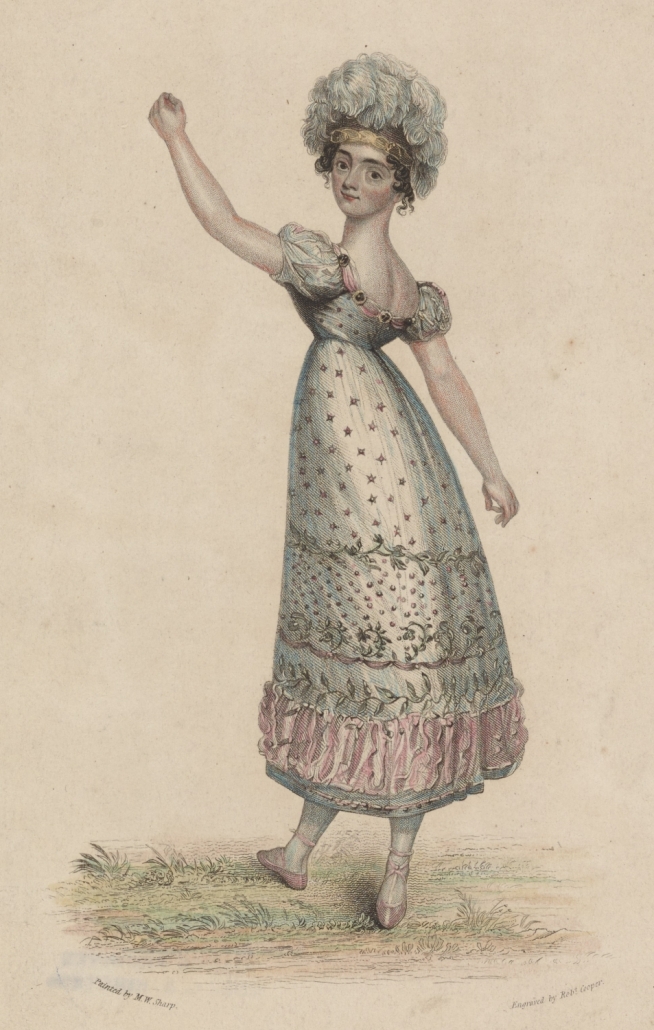
During the 1820’s his name was linked to a few actresses, specifically Mademoiselle Noblet, on whom it is alleged he spent a fortune.  It was also claimed by some he was the father of Maria Mercandotti, a very pretty dancer and actress he brought over from Spain – but the dates don’t fit with when he first met her mother!

Maria Mercandotti, James god-daughter that he brought over from Spain, and who was a much sought after dancer.

Local good deeds

It is hard to imagine the esteem in which James was held locally, both before and after his almost permanent residence at Duff House from 1833.  A very few of the many reasons for him being held in such high regard locally include:

  • his support for the local farmers during times of hardship; supplying seed to them and most notably during the potato famine of 1847;
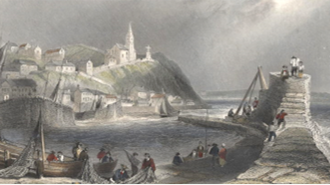
  • several improvements and expansions at Macduff harbour;  this picture shows men working on the harbour wall in 1842.  This added to the prosperity of the town which had been planned by his uncle;
Macduff Harbour wall being built in 1842 (from Finden’s contemporary Ports and Harbours).
  • creating, planning and growing the town of Dufftown (1817), intended to provide accommodation and employment for veterans of the Napoleonic wars;
  • paving the pavements of Elgin;
  • repaired and renovated much of Pluscarden Abbey;
  • building the Fife Arms Hotel on Low St, becoming one of the finest hotels in the north;
  • starting a soup kitchen;
  • assisting with funds to erect a new church for the Episcopal communion (St Andrews);
  • furnishing the County Hall;
  • opening the Pleasure Grounds of Duff House to the public for walking and riding;
  • developing his lands, planting new trees (including the huge Monkey Puzzle tree in memory of his friend from Spain, the Libertador of Argentine and Chile, Jose de San Martin); this led to the planting one hundred years later in 1950 of the Monkey Puzzle in Banff Castle grounds;
  • and his particular delight of seeking out those that needed help.  He is said on one occasion to have relieved an aged woman by carrying a sack of meal to her home for her; telling her to sieve the meal well before using it.  On her return home she did, and was filled with joy at finding several golden coins.

Apart from his friendship with the King, he had many friends, British and international, and knew most of the key society people of the early nineteenth century.  He often had grand parties at Duff House.  In 1850, James’s birthday was celebrated (on Mon 7th Oct as the 6th was a Sunday) with flags and decorations throughout the town; arches of flowers were erected at the Fife Arms and Oak Hotel (bottom of Strait Path); even the coaches from Inverness and Aberdeen were decorated with “fantastic and yet beautiful” shapes of flowers.  Bells, musicians, guns and mortars entertained a crowd that filled all the space from Bridge St to Greenbanks.  There was a huge Ball, held at the Barnyards (now Duff House Royal), another for the youngsters, and a dinner attended by hundreds.

Although enjoying robust health for most of his life, apart from occasional after effects of his wounds from Spain, James took ill in February 1857 and died on 9th March.  The Banffie reports that 10,000 people turned out for his funeral.  James Imlach, historian of Banff, summed him up as “A warrior and a courtier, a nobleman and a statesman, he rejoiced most of all in the title of the poor man’s friend.”


Part 1 of 2

James Duff – the future 4th Earl Fife – was born in Aberdeen on 6th October 1776 to Alexander, younger brother to James Duff 2nd Earl Fife, and Mary Skene of Skene.  The older James, at this stage, realised he probably wouldn’t have a direct heir, and was also somewhat critical of his brother as being “weak”; also his sister-in-law had been described as having “moral laxity and emotional instability”  So from the age of 6 our future hero was brought up in Duff House under the care of his uncle, to be groomed as the future Earl Fife.  He went to the renowned Dr Chapman’s school at Inchdrewer, and then in 1789 to Westminster School, before going in 1794 to Christchurch, Oxford.  However he soon became a student at Lincoln’s Inn and received legal training for three years, which would stand him in good stead in later life.

By 1793 his uncle had described “Jamie” as much “improved”, with “really good principles, and temper, with every prospect of application and good parts”.  He had an aptitude for languages, learnt Latin and Greek, and frequently visited the Houses of Lords and Commons.  He learnt the style and manner of great public speaking.  In 1794 Jamie abandoned his legal studies in London and joined the Allied army on the Continent, fighting against the French Republic.  He was present at the Congress of Rastatt, trying to resolve the French occupation of the left bank of the Rhine – until the French resumed fighting in 1799.

Jamie returned to London and on 9th Sept 1799 married Maria Caroline Manners.  This was most definitely a love match; the couple enjoyed society living in London and Edinburgh while also spending some time at Duff House.  He was appointed to the command of the Banff and Inverness Militia, and he reportedly much improved their discipline.

During a stay in Edinburgh on his militia duties, his wife was scratched on the nose by her pet Newfoundland dog.  Not much notice was taken of this incident, perhaps because rabies was only just starting to become known; not even when the dog became bad tempered and bit a groom; the dog was then put down.  Within a month however Maria became ill, and although the physicians realised the nature of the malady, it was too late to save her and she died on 20th December 1805 of “undoubted hydrophobia”.  She was described as “so well known and so universally esteemed” and was much mourned.

Although James was overwhelmed with grief it was several aspects of his life to date that led to the events that made him a true here.  He went back to Europe, joining a combined force of British, Swedish and Prussians, anticipating an inevitable war with Napoleon.   Looking for action he shifted to Vienna and joined the Austrian army under Archduke Charles, fighting in battles at Wertignen, Ulm, Munich and others.  Even though the French were victorious, James learnt much of military tactics.  On hearing of the disturbances in Spain he sailed from Trieste to Cadiz to assist the Spaniards against the French.   He learnt Spanish and fought with several of the Junta, but later uniting with an army under Lord Wellesley, later the 1st Duke of Wellington.

He fought at the  battle of  Talavera in which he was instrumental in moving some guns that then inflicted much damage on the French, and although wounded by a sabre cut to the neck during a counter-attack, still saved the life of a Spanish officer and led a harrying force on the fleeing enemy.

With reinforcements the French soon attacked outposts around Cadiz, and during the battle of Ocana, James was badly wounded while going to the successful aid of a beleaguered fort.  The Madrid Gazette said “Lord Macduff and Colonel Roche are the active and indefatigable agents of England with the Spanish armies.”  James received much praise and recognition, even if his name was pronounced “Maucdoov” !  He soon recovered and took an active part in many other battles. 

Meanwhile, in 1811 his father had died and James had become the 4th Earl Fife, and he prepared to head back to Scotland. Lord Wellesley presented him with a magnificent Damascus sword, ornamented with precious stones on a ground of solid gold, to mark his meritorious services.

4th Earl Fife medal as Knight of the Order of St Ferdinand (hanging on the red ribbon in the painting in Duff House)

The Cortes Generales, the Spanish Parliament, not only made him a General but also a Knight of the Order of St Ferdinand, Spain’s highest gallantry award – their equivalent to our later Victoria Cross.  On paintings of him after 1813 he is wearing this medal.

James later life and the good deeds he did around Banff and Shire are in Part 2 of his story to follow.


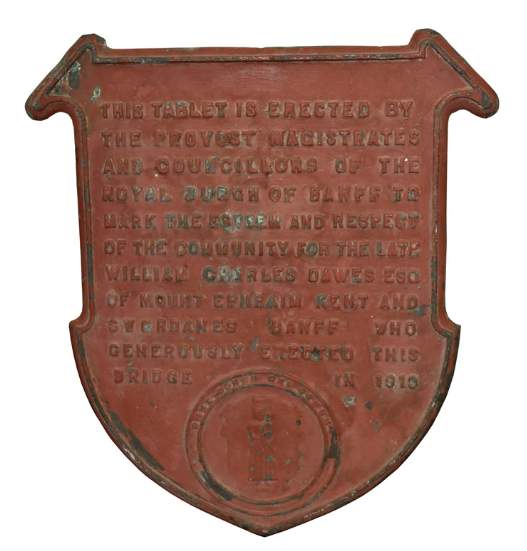
William Charles Dawes (1865 – 1920): there is tantalizingly little that can be said with surety about this man. Born in Surbiton, Surrey as the eldest son of four boys to Sir Edwin Sandy Dawes, a ship owner knighted for his contributions to the shipping industry and founder of the ‘Dawes Dynasty’, he will no doubt have had a privileged upbringing and enjoyed the fruits of his father’s labors. Foremost being life at Mount Ephraim, which are now ten-acre gardens open to the public.  Picture, if you will, what a delightful childhood that must have been. Consider your own, and the times in which you found yourself playing in your garden, and then transport your younger self into acres of private land characterized by their topiary, arboretum, water and rose gardens. One must wonder at the adventures these four lads undertook on hot summer days and the joy it brought them. 

Why did he dedicate a bridge so far north? To proffer a concrete answer would be speculative, but one fact that bears pointing out is that he was married to a woman called Jane Margaret Dawes nee Simpson, and that she was born 1st of september 1869 in Inverboyndie Banff. 

It may be a forgivable leap, especially for romantics among us, to suggest it was for his wife’s sake. Anything more than that with so little information on the man available and we would be venturing into conjecture, however. Perhaps the most important thing we can say about him that is not conjectural, is that he was of a noble spirit, as clearly demonstrated by his willingness to pay for the construction of a bridge at Inverboyndie at all.  


He died 20th of July, 1920 (19 days after his brother, second youngest, Col. Bethel Martyn Dawes) and is buried in the churchyard of St Michael, Hernhill, Kent, England; thirty-three years later, at the age of 84, his wife was reunited with him in eternal rest.

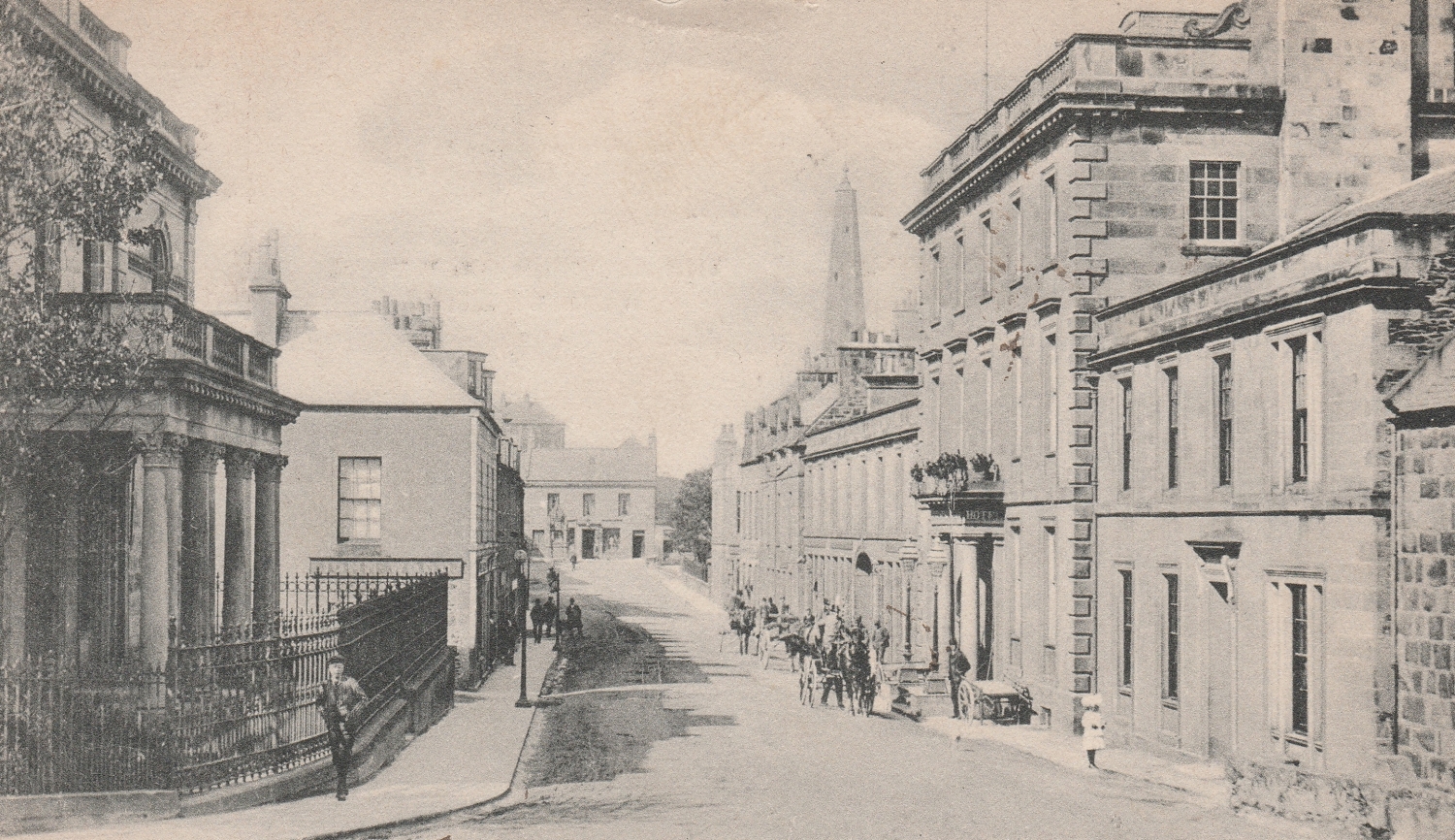
Image of the Low Street Banff

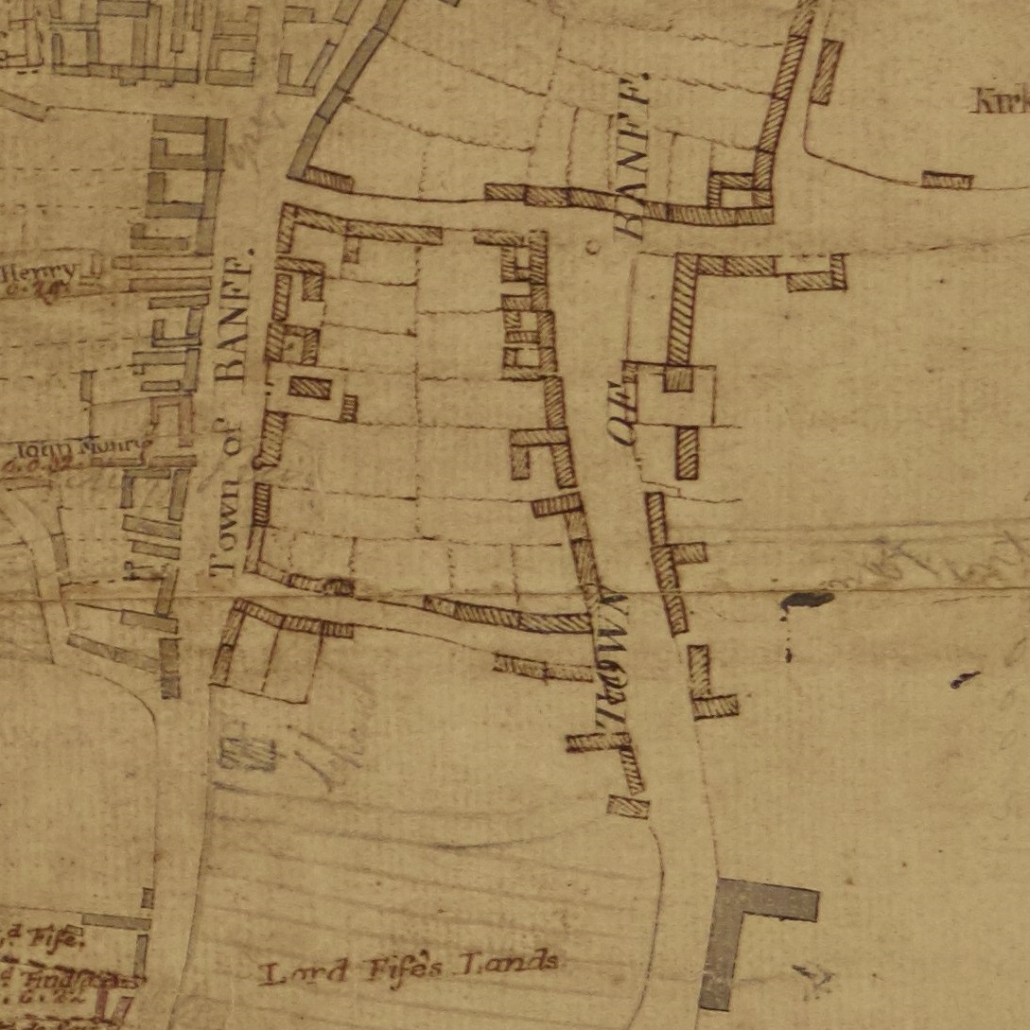
Low Street, Banff.  The first mention of a hotel on Low Street is 1773, when Samuel Johnson and James Boswell visited, hoping to meet with the Earl Fife, but he was not at home.  Apart from Samuel Johnson’s many literary works, it was in his Journey to the Hebrides that he recounted a story of his stay at the Black Bull Inn, and how the practice of not being able to hold windows open seemed to get him riled up!  This map of 1775 shows the layout of Low St as it must have been when Boswell and Johnson visited.

Banff 1775 excerpt

But in 1845 the Black Bull Inn was no more.  The Duffs had built a new building between 1843 and 1845 for the purpose of providing more space for visitors to Duff House; operating it as a commercial – and very successful – hotel: The Fife Arms Hotel.  This is the building that we see today – including it’s stables, but the gardens behind have since been built over.

The hotel was slowly equipped to be one of the leading hotels in the area “affording ample accommodation for all classes of travellers”.  The trade became so busy that in 1858 Mr Marshall the manager, invested in “a large number of first-class horses and new vehicles” including “Carriages, Broughams, Omnibus, Dog-Carts and Gigs” that “is not surpassed in the North”.  The cellar was stocked with first class wines and liquers of every description.  The hotel itself ran coaches to the rail stations at Huntly, Elgin, Aberdeen and Peterhead from 1858 (the Banff station didn’t open until 1859, and Banff Bridge – Macduff – 1860).  There were 39 bedrooms with a permanent staff of 16, rising in the summer to about 25.

We know the Lord Fife’s used the Fife Arms hotel from time to time, not least from a diary written and published by Elizabeth Pennell, an American authoress, who stayed there in 1888 (see separate Heritage Story).

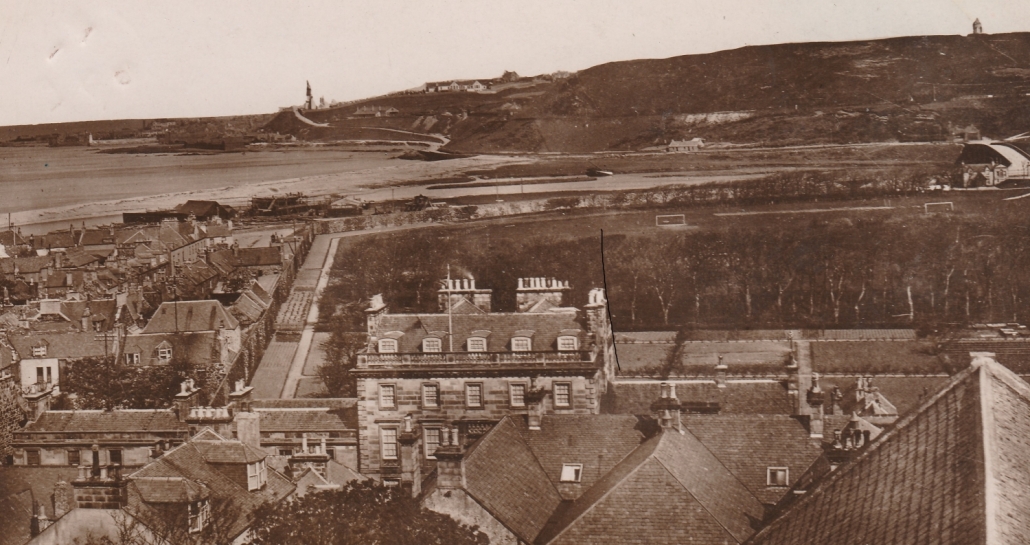
There were gardens behind the original hotel but these were the Kitchen Gardens for Duff House.  The 1873 Gardener’s Diary makes several mentions of interaction between the gardeners and the maids at the back of the hotel!  This postcard excerpt, sent in 1913, shows some of the layout of the Duff House Kitchen Gardens behind the hotel.

Postcard sent 1913 from St Andrews steeple looking east

These gardens do not appear to have been part of the gift to the towns by the 1st Duke of Fife in 1906; the 2 acres, including a greenhouse, remained in the ownership of the hotel, and were re-laid out in 1916.   In 1919 the hotel was taken over by Trust Houses – later Trust House Forte – adding an extension at the back in 1920.  A Mrs Simpson was manager from 1923 until at least the late 1950s.  One of it’s selling points was that it also owned a stretch of the River Deveron for private fishing, much advertised in newspaper adverts around the whole of the UK.  

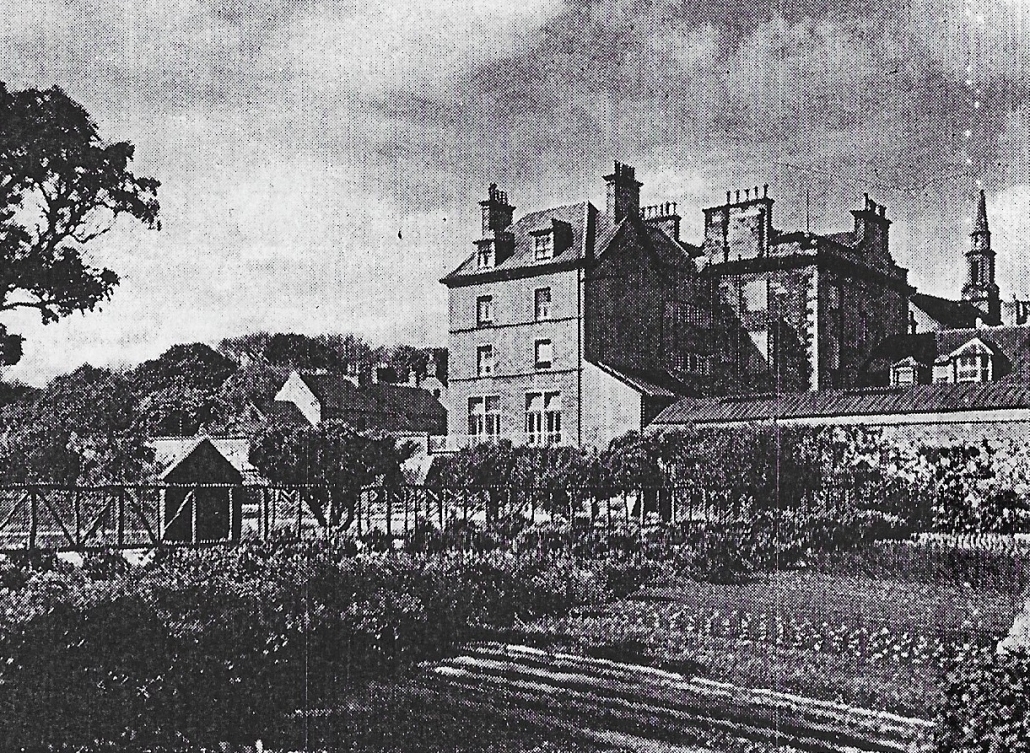
The gardens grew virtually all the vegetables needed by the popular hotel, as well as a flower garden, where guests could take a stroll or have wedding pictures taken.  Alexander Duncan, more commonly known as Dougan, had started work there in 1936, becoming head gardener, with his nephew as his apprentice, from 1946, taking over from Alexander Craib.  Dougan turned the garden into a prize-winning one – reported as 60 prizes in 1957; not considered bad for the most northerly garden of the Trust House network!   This photo shows the Fife Arms Hotel garden in 1957.

Fife Arms Hotel garden 1957

The hotel was closed on 29th October 1966 due to the cost it would have taken to upgrade its fittings to match modern standards.  It did open again as a hotel under private ownership, from 1968 to the early 80’s, after which from 1982 it was owned by Deveronvale Football Club to be run as their social club.  This only lasted to the mid-80s when it was sold again and was converted into flats in 1988.  The hotel gardens in 1985 became what is today mostly Airlie Gardens housing.

+++

Connected with the above story, we thank Sonia Packer for information about her uncle Dougan:

Mentioned above as Head Gardener at the Fife Arms from 1946, is Alexander Duncan, born 1920 in Alvah, generally known as “Dougan”.  His story shows a stalwart of the town.  He started work in the gardens of the Fife Arms aged just 15 and learnt his skill from Alexander Craib who had laid out the garden for the hotel, and from whom he took over in 1946.  For at least part of the war he was in the RAF on operations on Lancasters.  This photo is Dougan in 1957 while Head Gardener at the Fife Arms Hotel.  He left in 1965 when the Hotel was destined for closure.

Alexander (Dougan) Duncan in 1957

Dougan was also a player for Deveronvale and later was the much praised groundsman at Princess Royal Park; he was awarded two testimonial matches, 1986 and 2002.  Football was not his only sport, and both he and his wife Mary (married 1950) were keen badminton players.  For his retirement in 1985 he was given a set of golf clubs by Aberdeenshire Council.  Having joined them in 1965 being responsible for all the parks and gardens in Banff, ten years later when the Council re-organised he was appointed area supervisor with the Leisure and Recreations Dept covering the area from Sandend to Rothienorman, Fyvie and Gardenstown.  He also served for 21 years as a fireman, rising to sub-officer with the Banff team, retiring in 1981 with a good conduct medal.

After he was widowed Dougan lived at Airlie Gardens – the land he used to tend – until he died in 2007 at the age of 86.

Thanks and acknowledgements for this Story go to:

Sonia Packer for her input about her uncle Dougan;

The British Newspaper Archive and D C Thomson & Co;

National Records of Scotland.